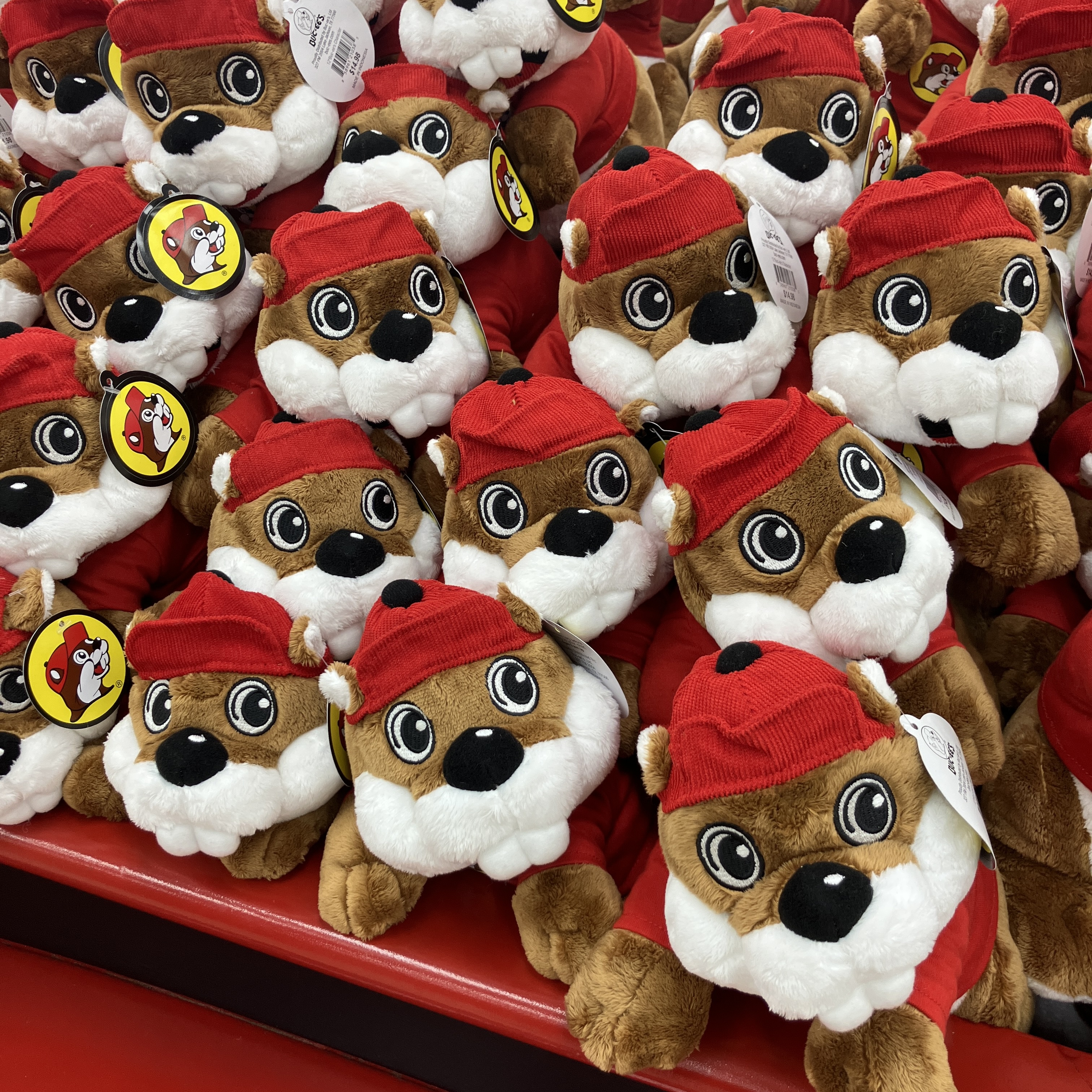
We pulled off the interstate in Richmond, Kentucky. It was our second gas stop less than two hours into the drive, our SUV heavy with boxes, working hard under the weight of my daughter’s belongings. Truthfully, we could have driven a little farther, but I couldn’t resist introducing her to the spectacle of Buc-ee’s.
Beneath the giant red-and-yellow sign, we snapped a quick photo to share with family before we hurried out of the cold. Surrounded by families swirling loudly around us, and a grinning, red-shirted rodent plastered on every surface, I felt the shift. It was the first day of 2026, and January had already set the pace.
Stepping just inside the door, my daughter froze. My secret plan to distract her from the heavy reality of leaving her hometown for college seemed to be working — at least temporarily. I had plenty of help. Lines of hungry travelers waiting for brisket sandwiches. Literal walls of jerky. A Cracker Barrel’s worth of cheeky home décor. And the world’s richest beaver, smiling knowingly, as the cash registers rang nonstop.
“This is… a lot,” she said, squinting, suspended in amused (and slightly horrified) disbelief.
I hadn’t expected to be presiding over this rite of passage, but there we were. Out of nowhere, a petite young woman approached me, holding the same pink Buc-ee’s sweatshirt in each hand.
“Excuse me, ma’am,” she said. Which size should I get?”
Sophia and I glanced at each other curiously. Was I really just referred to as…ma’am? I quickly sized the woman up.
“You should get a small,” I answered, definitively.
We locked eyes. The woman nodded solemnly, as if this were an urgent matter, and marched straight toward the cash register. My daughter and I looked at each other again, exchanging a silent but mutual What just happened?
The car was packed. The schedule was tight. The stakes were enormous. Yet there we were, giving wardrobe advice to a stranger and debating whether anyone truly needs a giant bag of Beaver Nuggets.
With more than fourteen hours still ahead of us, resistance felt pointless. We joined the flow instead, one more pair of travelers taking a sanity break before returning to whatever waited down the road.
“This is how January began, barreling onto the freeway of my life at one hundred miles an hour.”
This is how January began, barreling onto the freeway of my life at one hundred miles an hour. From day one through January thirty-first, the gas pedal never left the floor. Goodbyes and celebrations crowded the same week while endings melted into beginnings. One moment asked me to let go while the next called me forward. All of it unfolding against a backdrop of snow and a relentless cold that seems determined to stay.
Somewhere between Buc-ee’s and our destination, I stopped pretending this was a month I could curate. It wasn’t interested in reflection. It was asking me to keep up. I decided to put change in the driver’s seat without negotiating with it to slow down.
I started calling it Join-You-Ary: the month you merge into with your signal on, your heart racing, and possibly an energy drink in your cup holder. It was go time and we were ride or die.
The packed calendar and constant momentum felt both familiar and necessary. There was comfort in staying busy, although I knew it would have been useless to say no. Opting out at any point during the month would have meant resisting the many transitions already underway.
I have grown used to being a safe place to land while others prepare to move into their next chapters. I embraced my sweet mother as she reached the end of her life. I helped my father, badly bruised, but not broken, find his footing when his world fell apart without her. When my daughter needed me, I sheltered her as she navigated the uneven, uncertain work of becoming herself.
I have spent years willingly packing and unpacking for the people I love. This season was changing now, and for the first time in a long while, I wasn’t just holding the line. I was crossing it.
As I delivered my daughter to college, I quietly stepped into a new phase of my own. More space was opening to nurture a partnership oriented toward the future and a widening sense of family. A life shaped less by who needs me most and more by who walks beside me began to seem possible.
This wasn’t just a road trip. It was a very special delivery. The pain, the fits and starts, and the heavy work of waiting had stretched for what seemed like an eternity. And then, suddenly, we were here. We had arrived. My daughter was ready, and I was carrying her to a new nest she could make her own. I was ready, too.
“This season was changing now, and for the first time in a long while, I wasn’t just holding the line. I was crossing it.”
One week later, I found myself seated on an airplane alone while my daughter attended orientation for transfer students only a few miles away. Settled in her new place with her sister and family close by, I felt comforted. But I was sad to leave them. The thought of coming back energized me, though, and I suddenly felt filled with excitement to jet away to the next stop.
Waiting for the other passengers to board, I wondered how the house would feel now. I had bought it with the intention of making it a safe haven, a home base for both my daughters, insulated from the sharp edges of the world. Although that did not work out exactly as I had planned, it had delivered, carrying us through a decade of joy and grief, sheltering not only me but my entire family through more than I could have imagined at the start.
With less than twenty-four hours before my next flight — this one to New York for an engagement celebration — there wasn’t much time to think about where I’d been. In a few hours, I would put away the shorts and flip-flops I’d packed for Florida and pick up the winter layers from the pile of clean laundry I’d left folded on my bed. Next stop Manhattan and a host of new faces I couldn’t wait to meet.
When I got the text that both of my parents had fallen and had been taken to the emergency room, I felt alarmed and defeated. How could this have happened, I questioned? But I already knew the answer. My father had no doubt tried to help my mother walk and, in their declining health, both had taken a tumble.
I learned quickly that dad had been released but they’d kept my mother. Not because she’d been injured in the fall – miraculously she hadn’t been hurt except for a few deep purple bruises. They’d kept her for observation because, for what seemed to be the hundredth time, she had pneumonia.
Frustrated that I couldn’t get to them right away, I felt satisfied enough that at least mom was in a safer place and under 24/7 medical care. I’d lost count of how many times she’d been hospitalized. What started with a collapsed lung more than two years earlier had quickly become a steep and steady decline as she became weaker with each ER visit. She now weighed only 70 pounds, and it was truly an act of God that she hadn’t broken anything in the fall.
From my home office three hours away, I joined a call with the medical staff. On the call, I learned the full weight of my mother’s diagnosis. With my sister and I on the line and the rest of my family in the hospital room, I listened as the head nurse discussed care options, including hospice. We knew she was very sick, but wasn’t hospice for dying people?
Then, the plain-spoken nurse spoke what none of us had fully grasped until that moment: There is no cure for chronic obstructive pulmonary disease (COPD), and mom was in the final stages of it. The frequent emergency room visits could not help her.
How did we miss this? One of the countless doctors she had seen over the years had surely discussed this with her, I rationalized. She just didn’t remember. Or maybe she hadn’t fully understood. Or maybe she didn’t want us to know, to spare us from worrying about something we were powerless to control.
Suddenly and painfully, everything made sense. The extreme weight loss, the confounding bouts of confusion and delirium, the onslaught of respiratory infections one after the other, the crushing fatigue — all of these were symptoms of end-stage COPD.
A painful hush followed the nurse’s words. After a long silence, my brother’s girlfriend, holding the phone on speaker, said, “I’m so sorry.”
On Friday after work, I drove to my parents’ home in West Virginia. They’d released my mother shortly after that phone call and sent her home for palliative care. I found her resting in her bedroom when I arrived, cocooned in fluffy blankets and cushy pillows. The room’s bright pink walls, covered in old family photos, contrasted sharply with my mother’s ever-worsening health. She’d been given anxiety medication to calm her nerves and help her navigate the frightening bouts of confusion that left her mistaking my dad for her own deceased father-in-law.
As we visited, I held her hand and tried to keep a sunny demeanor. We chit-chatted about my drive from Ohio, talked about the weather, and tried to focus on nothing in particular — avoiding what was obvious. After a few minutes, she became restless. With great effort and intention, she suddenly sat up and, looking in my eyes she said, “You’re so beautiful. You’re such a beautiful woman.”
I felt a rush of warmth cover me as the pride radiated from deep inside of her. I felt both modest and proud to be the baby she had made more than 50 years earlier, and a living testament to the mother she had been ever since. She was smiling, and I smiled back at her and said, “Well, I got it from you.”
Then my mother took my hand in her cold, frail ones and said, “Thank you, honey. I love you with all my heart.”
Tears filled my eyes. I tried hard to stop them, to keep her from seeing me upset. But it was no use. The stinging liquid poured over my cheeks under the warmth of my mother’s loving gaze.
“I love you with all my heart too, mama.”
She reached for me gently, and I leaned in wrapping my arms around her tiny frame. I could feel the bumps of her spine in the palm of my hand and her ribcage with my fingertips. My mother’s sharp collar bones pressed into my chest, and I breathed in the smell of her freshly washed hair and the faint scent of Pantene as I held her tight.
I didn’t know how to fix her. No one did. So, I hugged her for a long, long time crying like a baby all the while. She felt so soft, so dainty, so fragile. I wanted to comfort her but realized that it was the other way around.
In the sunset of her life, my mother was the one comforting me, just as she had done a thousand times before. She gently patted my back, soothing my broken heart, and in an instant, I felt every fraught memory dissolve, chased away by her light. Every time I’d felt misunderstood, every argument we’d ever had, every harsh word exchanged — probably more from me to her as a teenage girl, if I’m honest — faded into nothing.
The only thing that existed in the world was that hug sitting on the bed in the too-pink bedroom. In that moment of energy between us, that transfer of love and grace, she’d given me everything I had ever needed and everything I would ever need.
For once she had no fear, no anxiety, no confusion — just love, light, and boundless comfort for her daughter. I didn’t know at the time that we would have a few months left with her. But I did know that in that hug, I was being given an extraordinary gift— her selflessness, her resilience, her joy, and her essence.
The 13th anniversary of September 11 has come and gone, but I’m still thinking about it.
Not because it was the worst terrorist attack on American soil in history, or the deadliest day in history for firefighters and police officers. Not because of the blistering image in my mind’s eye of the falling man’s last moments in this life as he made an impossible choice between sudden and violent death versus slower and agonizing death by fire.
I’m still thinking about it not because I, like most everyone else older than about age 23 or so, can recall the nation’s collective surge of panic, helplessness, heartbreak, kindness and outrage at what Gen X’ers might remember as the scariest thing related to homeland security that they can remember happening in their lifetime. It’s still fresh in my mind, not because I still feel the weight of loss from that day; loss of life, loss of innocence of sorts, loss of perhaps an entitled sense of security.
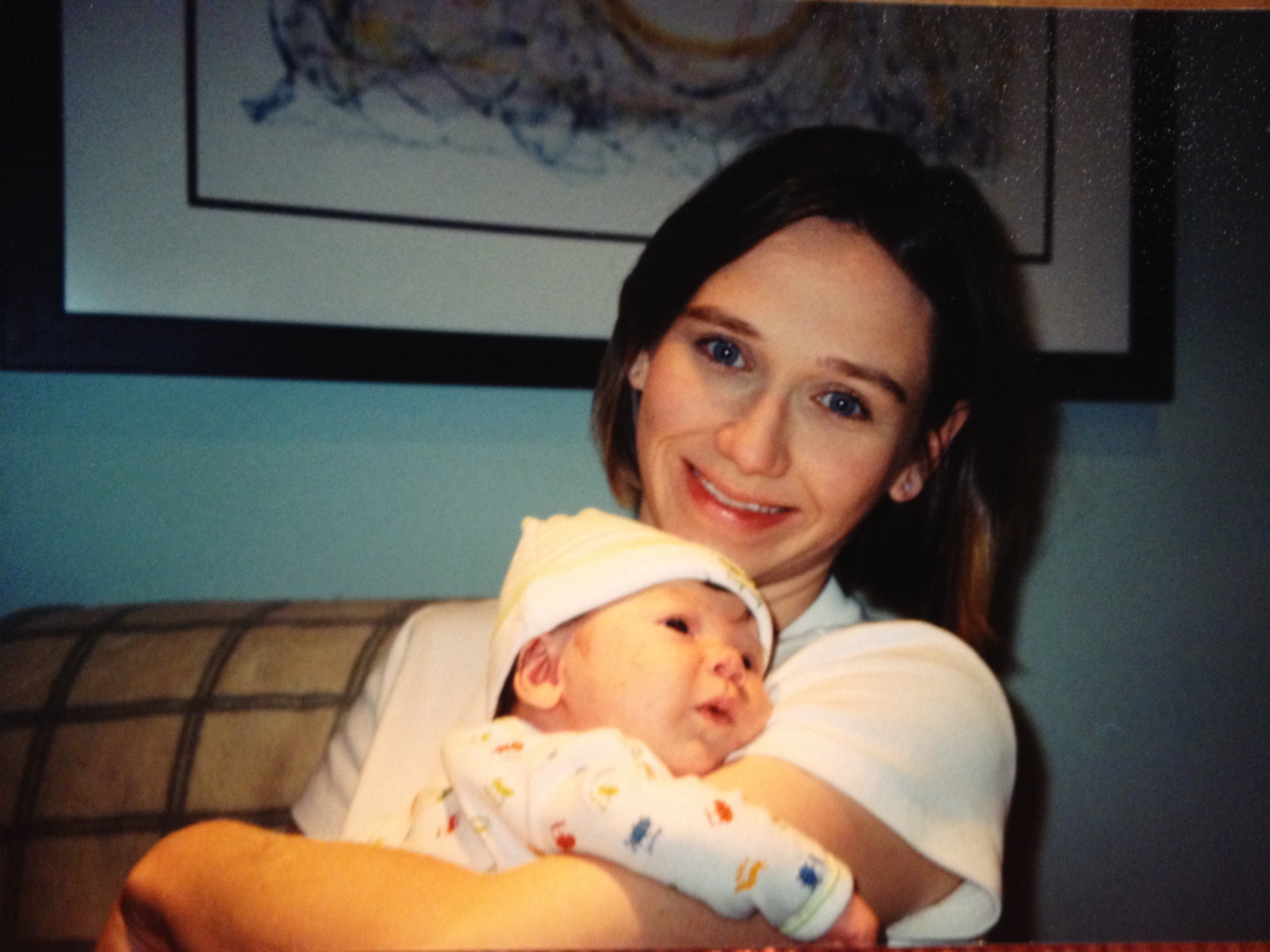
Thirteen years later, I recall in painful detail where I was and what I was doing on the morning of September 11, 2001. I was 27 years old and eight months pregnant with my first child. I remember picking out what had to be the ugliest maternity clothes I had (because they were the only ones that still fit) and going about a day’s work in small town
October 2001
Ohio with the most pressing question of the morning revolving around the choices for lunch.
But none of those facts are why last week’s anniversary is still on my mind even though the memorial ceremonies are over.
Wednesday night last week after dinner, I asked my oldest daughter how much homework she had to complete that night. It’s my standard question when, on school nights, I notice long stretches of time spent texting feverishly back and forth with her considerable social network.
“Not much,” she said. “I need to interview you, though.”
“An interview sounds fun,” I said. (I love interviews. I’ve been talking to people about their lives since I was able to talk.)
“What’s it about?”
“September 11,” she said. “For World History class we’re supposed to interview someone who remembers that day.”
I had two reactions. (1) What a cool assignment! (2) She truly has no idea what impact 9/11 had on the American collective reality.
If I’m being honest I also had a third reaction. I felt old. Kind of like when you ask your grandpa about World War II, or your parents about Vietnam. To Sophia, it probably seemed like 9/11 was as far in the past as any other event in the history books and just as one-dimensional. That was about to change.
She sat down on a barstool, pulled out a worksheet and started asking questions.
“Wait, aren’t you going to record this?” I asked. “So you can remember what was said in the interview?”
“No, I’m just gonna take notes on my phone as you talk.”
“Oh.”
Out of a desire to bond with my daughter as much as anything I took my time answering her questions, digging deep into the recesses of memory to tell her everything I thought was important about September 11, 2001. I wanted her to know. I wanted her to understand her place in the world and make changing it for the better a part of her life in some small way. Most of all I wanted her to know that even the worst of tragedies do not define us as individuals; as a nation. We still make our own destiny.
An hour later the energy between us had changed from the mechanics of a simple homework assignment to something much deeper. It was about 9:30PM, and I reluctantly pulled myself away from the dated news footage we were reviewing so that she could finish the written part of her assignment and go on to bed.
Around 10:15 Sophia asked me if I would print her assignment to turn in. I opened the file on my computer and instinctively set about proofreading her work when I realized that I was reading the manifestation of something amazing that had just transpired between my adolescent daughter and me. I had shared some of the tenderest feelings of vulnerability and love with her. Reading her assignment I realized that she heard me.
My tween heard me.
That night as Sophia and I watched old footage from the Today Show that was recorded live as the September 11 tragedy unfolded, I was transported back 13 years when I watched the same footage. That day and every day thereafter for a very long time I wondered who my new baby girl would be and how she would feel about the world when she was old enough to form an opinion.
Thirteen years ago the young girl sitting next to me was safely packaged inside of me, blissfully unaware of the day’s events. At present, she watched the footage intently, intelligently, decisively, emotionally. It was exactly the response I hoped she would have. And I know that in spite of the anxiety that sometimes comes with the realization that you’ve brought a new life into the world, that she is going to be great.
The recording of that interview plays continuously in my mind.
Remembering September 11, 2001, by Sophia Necco
Background information on the interviewee:
Name: Deidra Necco
Age: 40 (This is actually 39. Unrelated, don’t look at my Facebook birthday wishes from last year.)
Current occupation: Marketing director for Necco, our family company
Occupation on 9/11: Still the marketing director for Necco
Relationship to the interviewee: Mother
The Interview
“How did you learn about the terrorist attacks on the World Trade Center? Where were you and what were you doing?”
“I was at the old South Point office [our headquarters at the time], pregnant. I was pregnant with you.” I was her first child. “Someone rushed in and said there had been a plane crash at the WTC. I thought, ‘Oh, that’s really unfortunate.’ Eighteen minutes later: ‘There’s been another crash.’”
“What was your initial reaction when you learned the WTC had been attacked?”
“I thought to myself, ‘I hope this is a hoax. It’s probably true. Probably heading into war. This is the result of Bin Laden…’ because I had been following the news of his threats against the US. It was a very scary morning. I felt like at any minute, soldiers would be dispatched into a war zone. And not long after, they were.” She remembered the day so vividly, like it wasn’t thirteen years ago. “Navy blue pants and a bright yellow tee.” That is what she wore.
“What did you do after learning of the attack?”
“Well, everyone in the office sat around a radio. I looked online for information all day. I was very upset. I cried and cried. I was mad. And sad. And scared. Your father tried all day to get me to stop, and eventually I did. The whole time, I was thinking, ‘I hope I’m doing the right thing, bringing a child into this crazy freaking world.’”
“How did your thoughts and feelings change throughout the day as you learned more information and realized four attacks had taken place?”
“By the end of the day, it sank in. I mostly felt very angry and very sad for all the people who had lived and died in that crazy terror. Then the stories came of the last phone calls. People called their spouses, their parents, saying, ‘I love you, goodbye.’ It was so painful to watch; it just made you so mad. How dare you. What right do you have to kill innocent people?”
“What was the most frightening part of that day?”
“Not knowing if there was going to be a surprise attack somewhere else. I immediately thought of my sister, working in a tall building in Chicago. I called her before anyone else, telling her to leave. However Sophia, you were the first person I thought of. ‘My poor [first] baby is being born, and we are going into crazy war.’ Second thought was, ‘Where’s my sister?’”
“How did the events of 9/11 change your life?”
“The airport was an absolute pain. It’s almost like being disillusioned. Like if you could’ve known what it was like before then, the U.S. enjoyed more economic prosperity. It was a happier time. It’s like when you’re at a really fun event, and you’re on the dance floor having the time of your life, and someone just turns the lights on and says, ‘Party’s over,’ but obviously this is tragic – a complete nightmare. It was a wake up call. The rest of the world doesn’t live the way we do. We need to pay attention. I mean, who wasn’t paying enough attention? Who let this happen?”
“What is one thing you will remember the most about that day or the days and weeks that followed?”
“One story that really bothered me was about a company whose employees were all on the highest floors. Every. Single. One. Died. It was like if we showed up at Necco one day, and everyone was just dead. Weeks after were story after story of lost loved ones, people trying to save each other. That was what stuck with me, the human cost. It also puts things in perspective and you realize how sheltered we have been compared to other parts of the world. We lost almost 3,000 people there, but in WWII, the world lost millions of Jews. I sometimes feel guilty about places like Africa, where there are massacres killing large populations. It was the scariest moment I ever remember in my life.”
“Do you think Americans will ever feel as safe as they felt BEFORE the events of 9/11?”
“I think it’s more of a matter of just being more cautious. I want to think people are really making an effort to learn about the rest of the world. It would make a huge difference alone in politics, policy, and other things, if you study the needs of others. Americans to me are generally just stubborn. We have the, ‘Screw you, we’re the free. You came over on September 11, but you better not do it again,” attitude. “Very resilient.”
“What else would you like to tell me about your experiences on 9/11?”
“I was thankful I didn’t lose anyone, and I called my sister every day for a while to make sure she was alright. I tried to watch the stories, because I thought the least I could do was to hear about who these people were, and remember them. And even though I didn’t know them, I wanted to be that one more person out there that honors their memory.” She paused. “The worst part was that you were being attacked. You knew someone meant to do that, and you didn’t know what else was planned.”
“You should’ve recorded that,” she said to me. “I’ve never told that to anyone.”
My Reflection
2014
I was honestly pretty surprised by the results of this interview. I didn’t expect it to turn into such a deep conversation, or that my mom would really get that emotional over it. It just makes me think about the people who actually did lose a loved one. I feel like I should be more scared than I am (which is not scared at all). I do feel awful for the people who were really deeply affected by this, and clearly, my mother did do. I felt like when I listened to her answers to these questions, I saw a new side of her. She wasn’t just my mom; she was a person, just like so many others, that had been touched.
I feel like an event like this, while tragic, can really bring people together. 9/11 has always fascinated me. When I did my research this time, I looked for the happy stories. It made me smile looking at the kind messages left by total strangers, the way the medics, the police, and just ordinary people rushed to the site, ready to perform extraordinary acts of kindness for anyone in need. It really makes a statement about human nature. We’re shown how people can be so crazy hateful to each other, but in the end, they are always in some way trying to do the right thing. I’m not trying to romanticize Al Qaeda, because under no circumstance is it okay to kill innocent civilians. But in their minds, I guess they thought they were doing what they had to do. It raises the question for me, “Do they even consider themselves terrorists? Or do they think they are doing what has to be done?” I think even the cruelest villains are heroes in their own minds.
On the other hand, we are also shown how people come together in an emergency to help each other. Even though the people rushing to help those in New York had never talked a day in their life, they worked together to be kind, and put the needs of others first. Or when the people on the last flight knew the plane was being hijacked, they worked as a team to keep the plane from crashing into the capital. And although they knew they weren’t going to make it, they still put everything else aside in order to keep the people outside the plane safe.
The more I think and read about 9/11, the scarier it becomes. I didn’t know before that the fourth plane was heading towards the capital. I just found that out, actually, because I had to Google where the other plane was supposed to have landed. I’m just thinking about how terrifying it must’ve been to be on that flight, hearing about smoke from the bathrooms, watching as a scary man with an angry face takes control of the plane. Just looking at the route the terrorists planned was scary to me, because I know that something is very wrong with it. That is not the way the plane was supposed to go. Planes don’t fly like that.
Also, that’s our capital. The most important place in our country, the very place that rules us, could’ve been completely gone had it not been for Flight 93’s passengers. All our records would be gone. Our laws, our rulers, our plans for our future, and that of the rest of the world… Gone.
Hearing about 9/11 has helped me appreciate my life a lot better. I feel like I should really pay even more attention to the little things in life, and not get caught up in drama, because life is a pretty special thing, and I won’t have it forever. I sound very cliché right now, but it’s the truth. So just to be extra cheesy, I’ll end this essay by saying, “You only live once. #YOLO.”



 Dee Wiley