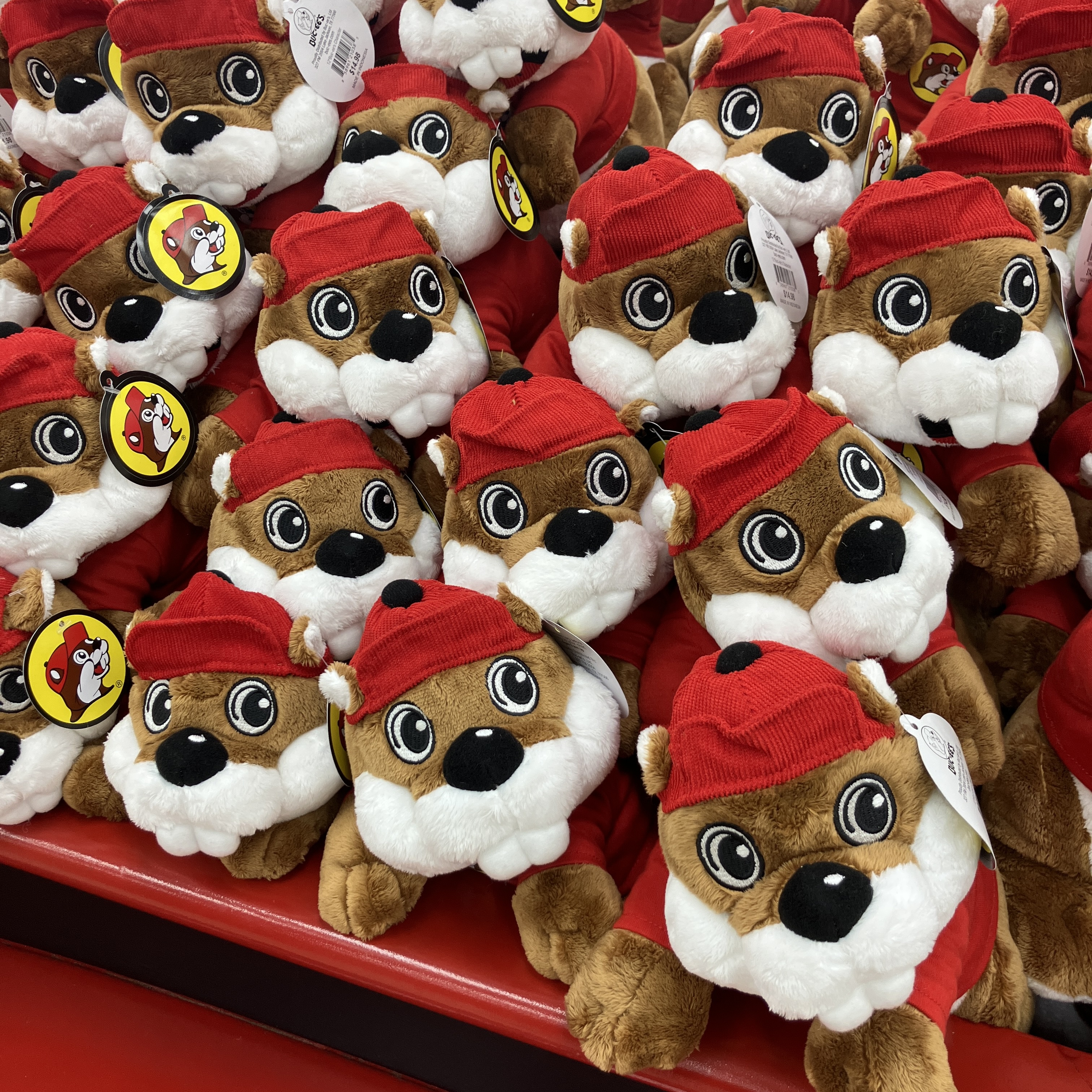
We pulled off the interstate in Richmond, Kentucky. It was our second gas stop less than two hours into the drive, our SUV heavy with boxes, working hard under the weight of my daughter’s belongings. Truthfully, we could have driven a little farther, but I couldn’t resist introducing her to the spectacle of Buc-ee’s.
Beneath the giant red-and-yellow sign, we snapped a quick photo to share with family before we hurried out of the cold. Surrounded by families swirling loudly around us, and a grinning, red-shirted rodent plastered on every surface, I felt the shift. It was the first day of 2026, and January had already set the pace.
Stepping just inside the door, my daughter froze. My secret plan to distract her from the heavy reality of leaving her hometown for college seemed to be working — at least temporarily. I had plenty of help. Lines of hungry travelers waiting for brisket sandwiches. Literal walls of jerky. A Cracker Barrel’s worth of cheeky home décor. And the world’s richest beaver, smiling knowingly, as the cash registers rang nonstop.
“This is… a lot,” she said, squinting, suspended in amused (and slightly horrified) disbelief.
I hadn’t expected to be presiding over this rite of passage, but there we were. Out of nowhere, a petite young woman approached me, holding the same pink Buc-ee’s sweatshirt in each hand.
“Excuse me, ma’am,” she said. Which size should I get?”
Sophia and I glanced at each other curiously. Was I really just referred to as…ma’am? I quickly sized the woman up.
“You should get a small,” I answered, definitively.
We locked eyes. The woman nodded solemnly, as if this were an urgent matter, and marched straight toward the cash register. My daughter and I looked at each other again, exchanging a silent but mutual What just happened?
The car was packed. The schedule was tight. The stakes were enormous. Yet there we were, giving wardrobe advice to a stranger and debating whether anyone truly needs a giant bag of Beaver Nuggets.
With more than fourteen hours still ahead of us, resistance felt pointless. We joined the flow instead, one more pair of travelers taking a sanity break before returning to whatever waited down the road.
“This is how January began, barreling onto the freeway of my life at one hundred miles an hour.”
This is how January began, barreling onto the freeway of my life at one hundred miles an hour. From day one through January thirty-first, the gas pedal never left the floor. Goodbyes and celebrations crowded the same week while endings melted into beginnings. One moment asked me to let go while the next called me forward. All of it unfolding against a backdrop of snow and a relentless cold that seems determined to stay.
Somewhere between Buc-ee’s and our destination, I stopped pretending this was a month I could curate. It wasn’t interested in reflection. It was asking me to keep up. I decided to put change in the driver’s seat without negotiating with it to slow down.
I started calling it Join-You-Ary: the month you merge into with your signal on, your heart racing, and possibly an energy drink in your cup holder. It was go time and we were ride or die.
The packed calendar and constant momentum felt both familiar and necessary. There was comfort in staying busy, although I knew it would have been useless to say no. Opting out at any point during the month would have meant resisting the many transitions already underway.
I have grown used to being a safe place to land while others prepare to move into their next chapters. I embraced my sweet mother as she reached the end of her life. I helped my father, badly bruised, but not broken, find his footing when his world fell apart without her. When my daughter needed me, I sheltered her as she navigated the uneven, uncertain work of becoming herself.
I have spent years willingly packing and unpacking for the people I love. This season was changing now, and for the first time in a long while, I wasn’t just holding the line. I was crossing it.
As I delivered my daughter to college, I quietly stepped into a new phase of my own. More space was opening to nurture a partnership oriented toward the future and a widening sense of family. A life shaped less by who needs me most and more by who walks beside me began to seem possible.
This wasn’t just a road trip. It was a very special delivery. The pain, the fits and starts, and the heavy work of waiting had stretched for what seemed like an eternity. And then, suddenly, we were here. We had arrived. My daughter was ready, and I was carrying her to a new nest she could make her own. I was ready, too.
“This season was changing now, and for the first time in a long while, I wasn’t just holding the line. I was crossing it.”
One week later, I found myself seated on an airplane alone while my daughter attended orientation for transfer students only a few miles away. Settled in her new place with her sister and family close by, I felt comforted. But I was sad to leave them. The thought of coming back energized me, though, and I suddenly felt filled with excitement to jet away to the next stop.
Waiting for the other passengers to board, I wondered how the house would feel now. I had bought it with the intention of making it a safe haven, a home base for both my daughters, insulated from the sharp edges of the world. Although that did not work out exactly as I had planned, it had delivered, carrying us through a decade of joy and grief, sheltering not only me but my entire family through more than I could have imagined at the start.
With less than twenty-four hours before my next flight — this one to New York for an engagement celebration — there wasn’t much time to think about where I’d been. In a few hours, I would put away the shorts and flip-flops I’d packed for Florida and pick up the winter layers from the pile of clean laundry I’d left folded on my bed. Next stop Manhattan and a host of new faces I couldn’t wait to meet.
When I got the text that both of my parents had fallen and had been taken to the emergency room, I felt alarmed and defeated. How could this have happened, I questioned? But I already knew the answer. My father had no doubt tried to help my mother walk and, in their declining health, both had taken a tumble.
I learned quickly that dad had been released but they’d kept my mother. Not because she’d been injured in the fall – miraculously she hadn’t been hurt except for a few deep purple bruises. They’d kept her for observation because, for what seemed to be the hundredth time, she had pneumonia.
Frustrated that I couldn’t get to them right away, I felt satisfied enough that at least mom was in a safer place and under 24/7 medical care. I’d lost count of how many times she’d been hospitalized. What started with a collapsed lung more than two years earlier had quickly become a steep and steady decline as she became weaker with each ER visit. She now weighed only 70 pounds, and it was truly an act of God that she hadn’t broken anything in the fall.
From my home office three hours away, I joined a call with the medical staff. On the call, I learned the full weight of my mother’s diagnosis. With my sister and I on the line and the rest of my family in the hospital room, I listened as the head nurse discussed care options, including hospice. We knew she was very sick, but wasn’t hospice for dying people?
Then, the plain-spoken nurse spoke what none of us had fully grasped until that moment: There is no cure for chronic obstructive pulmonary disease (COPD), and mom was in the final stages of it. The frequent emergency room visits could not help her.
How did we miss this? One of the countless doctors she had seen over the years had surely discussed this with her, I rationalized. She just didn’t remember. Or maybe she hadn’t fully understood. Or maybe she didn’t want us to know, to spare us from worrying about something we were powerless to control.
Suddenly and painfully, everything made sense. The extreme weight loss, the confounding bouts of confusion and delirium, the onslaught of respiratory infections one after the other, the crushing fatigue — all of these were symptoms of end-stage COPD.
A painful hush followed the nurse’s words. After a long silence, my brother’s girlfriend, holding the phone on speaker, said, “I’m so sorry.”
On Friday after work, I drove to my parents’ home in West Virginia. They’d released my mother shortly after that phone call and sent her home for palliative care. I found her resting in her bedroom when I arrived, cocooned in fluffy blankets and cushy pillows. The room’s bright pink walls, covered in old family photos, contrasted sharply with my mother’s ever-worsening health. She’d been given anxiety medication to calm her nerves and help her navigate the frightening bouts of confusion that left her mistaking my dad for her own deceased father-in-law.
As we visited, I held her hand and tried to keep a sunny demeanor. We chit-chatted about my drive from Ohio, talked about the weather, and tried to focus on nothing in particular — avoiding what was obvious. After a few minutes, she became restless. With great effort and intention, she suddenly sat up and, looking in my eyes she said, “You’re so beautiful. You’re such a beautiful woman.”
I felt a rush of warmth cover me as the pride radiated from deep inside of her. I felt both modest and proud to be the baby she had made more than 50 years earlier, and a living testament to the mother she had been ever since. She was smiling, and I smiled back at her and said, “Well, I got it from you.”
Then my mother took my hand in her cold, frail ones and said, “Thank you, honey. I love you with all my heart.”
Tears filled my eyes. I tried hard to stop them, to keep her from seeing me upset. But it was no use. The stinging liquid poured over my cheeks under the warmth of my mother’s loving gaze.
“I love you with all my heart too, mama.”
She reached for me gently, and I leaned in wrapping my arms around her tiny frame. I could feel the bumps of her spine in the palm of my hand and her ribcage with my fingertips. My mother’s sharp collar bones pressed into my chest, and I breathed in the smell of her freshly washed hair and the faint scent of Pantene as I held her tight.
I didn’t know how to fix her. No one did. So, I hugged her for a long, long time crying like a baby all the while. She felt so soft, so dainty, so fragile. I wanted to comfort her but realized that it was the other way around.
In the sunset of her life, my mother was the one comforting me, just as she had done a thousand times before. She gently patted my back, soothing my broken heart, and in an instant, I felt every fraught memory dissolve, chased away by her light. Every time I’d felt misunderstood, every argument we’d ever had, every harsh word exchanged — probably more from me to her as a teenage girl, if I’m honest — faded into nothing.
The only thing that existed in the world was that hug sitting on the bed in the too-pink bedroom. In that moment of energy between us, that transfer of love and grace, she’d given me everything I had ever needed and everything I would ever need.
For once she had no fear, no anxiety, no confusion — just love, light, and boundless comfort for her daughter. I didn’t know at the time that we would have a few months left with her. But I did know that in that hug, I was being given an extraordinary gift— her selflessness, her resilience, her joy, and her essence.
I’ve driven the AA Highway at least fifty, maybe a hundred times traveling to and from my parents’ home in West Virginia over the last fourteen years. The three-hour drive is a perfect time for audiobooks and deep thinking, two things I enjoy but that feel more like consolation prizes for committing to extended time in the car. I can’t say I’ve ever felt excited about the drive, but I always notice something new and interesting once I’m on the road.
Running along the northeastern border of Kentucky, the AA winds long through rolling hills and spacious homesteads, traversing a landscape that cycles through ebullient pastels, verdant greens, and fiery reds, golds, and coppers depending on the season. Each year, the steely grays and smoky browns of winter signal the opportunity for a clean slate, as they make way for a new canvas of color at the first hint of spring.
When the sun goes down, the color goes with it, as the rural expanse fades to black, lit sporadically by oncoming headlights that seem to come from nowhere. That’s when you’d be wise to be on heightened alert, watching for unsuspecting wild animals that are known to venture dangerously onto the highway. Normally, the poor deer, raccoons, or possums would be top of mind given my tendency to drive over the speed limit. But this time I hadn’t given them a second thought. My mind was still in WV.
After a late weekend trip to check on my parents, I was on my way home after a long Monday, tired in a way that makes you feel numb from head to toe. With a bandwidth of basically zero, I tried to focus on making it home quickly, accompanied only by an audiobook to keep me occupied. Last October I had spiritedly chosen to listen to Bram Stoker’s Dracula, a fifteen-hour reading that remained unfinished. A desolate winter drive through Kentucky seemed like an appropriate time to complete it. But as I drove on listening to the deep tones of Tim Curry voicing Dr. Van Helsing, I felt a deep fatigue settle over me. With it came loneliness, a specter in its own right that comes for me when I am most vulnerable. I wished I wasn’t alone.
The highway stretched in front of me like an endless black ribbon flanked by an even darker blanket. My mind began to wander. Although my body felt heavy, I couldn’t have fallen asleep if I tried. Every inch of me was flooded with lingering adrenaline from nearly six months of caregiving and almost constant family stress. I had become an active member of the sandwich generation, although to me life felt more like a lasagna, with too many messy layers stuffed full with sticky, complicated emotions.
My passengers became every life-changing thing that had happened over the last five years. I was of a mindset to accept them all though: the separation, reunification, and separation again from one daughter or the other; finding out I was wrong about who I thought was the love of my life; my mother’s recent health scares; my brother’s battle with addiction; and supporting a college student on a single income. A carousel of fast-moving observations about these events circled my thoughts, returning to the same point at each go-round: my complete exhaustion. Spent in every way, I was too tired to feel.
But I could see.
I had been driving almost two hours when I noticed the fading orange horizon. I felt a rush of gratitude for the distraction. Lost somewhere between Stoker’s tense, seductive words filling my ears and an endless stream of responsibilities filling my head, I realized I had missed most of the sunset.
The last few minutes of daylight reduced the sun to a narrow sliver of orange and gold. Sinking steadily as the night sky descended in its place, the light seemed to wink and flicker a sparkling goodnight. The once colorful trees had turned jet black, outlined sharply against the citrus-hued band. They no longer seemed real, looking instead like a line drawing that my daughter might have carefully sketched in art class.
With the boundary between day and night so stark in front of me, I stopped to honor the passage of time, noting how quickly life can change. We are both mighty and small in our ability to create our own story, which is subject to change in an instant and sometimes comes without our consent. My daughters and I were living a vastly different story than the one we started with. My parents were about to embark on a different story as well. My heart filled with a dizzying mix of sadness and hope at the thought of how our family had changed. It was time for the passing of the torch, from one who is cared for to caregiver. Somewhere along the line I had crossed through a one-way portal to a world I didn’t recognize, but that felt so obvious. My story had changed too for probably the 100th time. I lost count long ago.
I passed a farmhouse that was lit by candles in every window, standing two and a half stories. The shadowy structure, looming tall against the sleepy sunset, seemed welcoming and safe. I imagined the people inside were waiting for someone to come home, a feeling to which I could deeply relate. This was someone’s safe place. I kept driving, determined to reach mine, and also knowing that if I never made it back home I would always be the safest place I’ve ever been. I found stillness and comfort in that thought.
The black of night settled in place around me and I turned my attention back to the book, which I realized I had stopped listening to a few miles back. I had missed Dr. Van Helsing’s plot to destroy Count Dracula with the power of the light in a race against the setting sun.
I continued home feeling lucky to have glimpsed the last flash of sunlight before the horizon closed her eyes for the night. Having laid my demons to rest, I knew I would soon do the same and begin again tomorrow.
One of the best things about growing up in a rural community was the opportunity to gather with extended family for the holidays. My mother had three sisters, as many brothers-in-law, and several nieces and nephews. Her mother, Helen, took great pride in hosting all of us for dinner, especially at Thanksgiving.
Mamaw Helen was exactly the kind of home cook you’d expect as a stay-at-home mother in a traditional Appalachian family. She often prepared old recipes passed down through generations, usually involving an iron skillet and no small amount of butter or bacon grease. To this day, no one will attempt fried chicken due to the legacy she left for perfecting it. Unsurprisingly, her Thanksgiving dinners were feasts for the ages every single year.
I looked forward to Thanksgiving at Mamaw Helen’s like a puppy anticipates being picked up and held. To me these occasions were magic. Although I haven’t seen her in more than forty years, her memory and that of her hospitality are just as real today as her home grown green beans simmering with a ham hock on the stove were in 1979.
Mamaw’s house sat atop a hill overlooking Sand Lick, West Virginia. If our family arrived first, I eagerly took a spot next to the big stone hearth in the living room. From this vantage point, I could gaze out the window at the valley below carefully examining the one-lane road that wound along the creek.
After a few moments of seeing no one I recognized, I wandered in and out of Mamaw’s kitchen returning to the window every few minutes to look for my Aunt Janet’s car. I couldn’t wait to see my cousins and watched expectantly for them to cross the small, wooden bridge leading to our side of the creek.
Noticing my anxious pacing, my dad said to me one day “A watched pot never boils.” It was the first time I remember hearing this platitude and laughed because it sounded comical. It still does as I am often reminded of an important truth that lives in a simple turn of phrase.
Everything in the universe manifests only when it is meant to. Your job is to direct your attention to the present, exercise patience, and trust that all good things come in time. Meanwhile, let gratitude for what is and what’s to come fill any anxious space.
Eventually, everyone would arrive and the house would buzz with fellowship and laughter. My grandfather, Papaw Chess, would carve the turkey at the head of a table of six that was usually overflowing. Folding chairs were added to accommodate all.
The mismatched chairs and crowded table were evidence of my grandparents’ generosity though they themselves lived modest lives. Regardless of how much food was prepared, there was always enough for everyone and always room for one more. If my grandparents felt strained by all the people gathered in their home, they never showed it. It didn’t matter to them if more guests meant a little less space or fewer servings of turkey. This left me with two important ideas.
One: Generosity is gratitude in action.
Two: Things don’t have to be perfect to be perfect.
As the adults shared the latest news of their lives, the kids had their own agenda – and their own table.
The main dining room may have been revered but the kids’ table was chaotic and sacred. With full plates in hand, my cousins, siblings, and I gathered round the living room coffee table, kneeling on pillows from the couch or sitting on the floor, squeezing our small legs underneath, around, or in whatever configuration worked comfortably.
It was our space and our time – apart from the strange adultness of the adults. We could say what we wanted as long as it wasn’t loud enough to get the attention of our parents. Table manners were delightfully nowhere to be found.
There was an unspoken hierarchy at the kids’ table. I, accustomed to the role of firstborn among my siblings, was neither the oldest nor the youngest here. At times the social dynamic felt awkward and uncomfortable as everyone worked to establish both rapport and a pecking order among cousins that only saw each other occasionally.
We looked to each other for clues about how to act, what jokes were funniest, whose idea for play was the best, or how to misbehave without getting caught. Although my young self didn’t realize it in the moment, I was thankful for the chance to spend this time with my family, awkward as it sometimes seemed.
I have grown to understand that regardless of where you sit in the social hierarchy – at the kids’ table or in the board room – the expression of gratitude is a powerful form of leadership. This is especially true when things get difficult.
In other words, being grateful – especially in disappointing circumstances – is an audacious act that can keep you going and lead the way for others.
One of us kids was usually the loudest and the bossiest, and I can’t (or won’t) say who that was. And it doesn’t matter anyway because no matter if someone’s feelings were hurt, or whose ideas prevailed, we eventually found our way back to joyously living in the moment.
It turns out the kids’ table isn’t the only place where you must learn to roll with the punches.
True gratitude requires radical acceptance of everything that is happening in your life – both good and bad. Especially the bad. Just like at the kids’ table, a refusal to accept what you can’t change means you stop playing.
Mamaw Helen passed away in the late 1980s. Family gatherings changed after that.
In my mind I return to my grandmother often. I’m reminded that at Thanksgiving and in life, not everyone shows up when we want them to. I know now, although reluctantly, that it’s possible to grieve the loss of the familiar and continue to be grateful for what has changed.
Of the many truths that childhood Thanksgivings around the kids’ table revealed for me, maybe the most important one is this.
There is a place for everyone. Sometimes that place is in your heart.
Ermias is from Somalia. He works as a parking attendant at the lot where I park my car on the days I drive to work. Every day he greets me by my first name, and I his.
As a “downtowner” I’ve utilized many garages and parking lots, and I’ve found that most people are surly at 7:45 in the morning when they park cars for a living, mustering little more than a grunt as they hand you your paid ticket. You know what? So am I. I am often surly too most days, angsty about paying to park my car and distracted by the shortcomings of corporate America. Early on though, I noticed that Ermias had a completely different energy at 7:45AM.
For a long time I never asked him his name. It was simply, “good morning.”
“Good morning.”
“It is cold today.”
“Sure is.”
“Have a nice day.”
“You too.”
One day in the fall he cracked an awkward joke and I asked him where he was from. He told me he was from Somalia and that he had 3 little kids, all under 6 years old, and a wife. We exchanged pleasantries and knowing smiles that spoke to having young children. Every day after that, I thought about his young family. Ermias was so happy each and every day, rain, snow or shine, parking cars for people in wireless headphones, low-heeled pumps and business attire. And I started to wonder. I wondered what his family was like beyond the dusty parking lot.
Just before Christmas, I decided that I was going to bake some cookies, which if you know me you know that means getting the pre-cut dough from Kroger and putting them in the oven. Modest as they were, I decided I would give the parking attendant a tin of chocolate chip cookies. After all he had been so nice, and always helpful.
I had taken that week off work to be with my own children, who ended up having other ideas about how they wanted to spend their holiday. Needless to say I had some extra time. One morning during the break I turned on the oven, and within about an hour had a warm tin of fresh chocolate chip and white chocolate macadamia nut cookies. I drove downtown, pulled in the lot and stopped. The attendant rushed out with his ticket book in hand.
I got out of the car and smiled. “I’m not parking today,” I said. He looked at me confused. Reaching into the back seat I pulled out a bag with the cookie tin and handed it to him.
“These are for your kids, and for you. Merry Christmas,” I said. “Take these to your babies and enjoy.”
He beamed. I mean, his smile was as real and as pure as anything in the natural world, and he said, humbly, “Thank you so much.” He paused and then said, “Here, give me a hug.”
It was the best hug. The. Best.
“What is your name?”
I told him my name.
“What is your name?” I asked.
“Ermias.” Then he said it again and spelled it for me.
“Ermias,” I repeated. We laughed. “Stay warm out here,” I said.
One day when I was a small girl my dad took me fishing. There was this little creek not far from our home where smooth, rounded rocks covered the banks and you could wade across without much trouble. It was a popular spot with well-worn paths through unchecked shrubs, trees and other forms of Appalachian vegetation. You could tell that the creek received frequent visitors, what with the occasional empty milk jug, cigarette pack or discarded bait containers scattered every thirty feet or so.
Where the bank touched the water’s edge someone, probably a group of kids, had created a makeshift stone wall with the plentiful sandstone rocks along the edge of the creek. I imagined it must have taken them all day to gather just the right sized stones, placing them strategically to engineer a small pool. I wanted to wade into the pool, but dutifully followed Daddy as he made his way down the footpaths holding two fishing rods, a live bait bucket and a small cooler filled with Coca Cola. A set of keys from our Chevy truck hung out of his back pocket and a cigarette held steady underneath his mustache. I followed him closely as one would on a mission.
Before my sister and brother came into existence Daddy talked a lot about his “namesake.” He was my grandparents’ only son; the youngest son. My Aunt Kay, his older sister, only had girls and besides that she was a female herself, so Daddy felt tremendous duty to carry on the family legacy. He talked often about having a son that could carry on the Wiley family name. Maybe someone named Tom – like himself. He eventually got his wish when my brother, the youngest sibling, was born. But this was before, and at the time he couldn’t have known what his family would end up looking like.
I was the firstborn, and I was a girl. Two facts that were never far from any conversation. “Meet Dee Dee, my eldest,” he would say. “She’s my Tomboy.” I beamed with pride – never resentful. I would smile and feel a sense of accomplishment that I, a little girl, had (through circumstance, fate, devine intervention) stepped into the role of firstborn as it existed in Daddy’s mind. I could, and would, do anything that a boy could do, with the exception of a few obvious things like pee standing up. Accordingly he gifted me with the ritual he would have otherwise reserved for a son – fishing in the creek with live bait amid long, quiet stretches of time spent waiting and tall tales of the one that got away.
We took some rusty metal lawn chairs, the kind where the woven seat fabric frays easily and if you’re not careful the sharp edges of the arm rests threaten to tear a gash or leave a nasty bruise on an unsuspecting hip, or waist even – if you’re short and around five years old. The cooler hid some frozen Zero bars in case we got hungry.
We made camp in broad daylight, building fortifications for our fishing rods out of rocks and piling them so that they secured our poles. Daddy positioned the lawn chairs not far behind the pole stands; cooler in the middle ready and waiting for a snack attack. After a ride with the windows down in the truck, a modest trek down the footpaths to the creek and the thoughtful positioning of our equipment and beverages we were ready to fish. I felt excited to see what would happen next. I wanted to catch the biggest one – what a story that would make.
The sky was part overcast, as is often the case in the West Virginia summer when the heat and humidity seem to be trapped between the mountain ridges. Daddy baited the hook – something I refused to do because, gross, and why turn down his offer of assistance? I felt sorry for the slimy earthworms with sharp hooks in their bellies. “Don’t worry baby,” he assured me. “They can’t feel it.” Daddy helped me cast the line two or three times until I started to get the hang of it. Then he stepped back, wiped the sweat from his brow and said, “Go on. Throw it out there. You don’t need my help.”
I cast the line into the creek with all the strength a scrawny little girl could muster. The doomed earthworm went about four feet, barely beyond the water’s edge. I looked at Daddy and he just nodded. Try again. He stood and watched me as I made a second attempt, this time putting my whole body into the cast. It went about twelve feet.
Then, I waited.
While Daddy set about casting to different parts of the creek and setting his own line I sat for a little while in the rusty old lawn chair, watching. I felt a twinge of competition when his line reached the other side of the creek, and a snicker when it went too far and snagged a tree trunk. Just as he found his sweet spot, I noticed my line shivering just slightly. I jumped up to grab my fishing pole. “No, not yet,” Daddy said. “It’s just the current.”
The smooth, rounded sandstone rocks on the bank fit my little hands well. I remember holding one that fit perfectly in the palm of my hand, feeling its coolness, integrating its weight. Then I threw it. I threw it as hard as I could. The stone splashed into the water causing a happy disturbance in the quiet of the afternoon. Giggling, I threw another. And then another.
“You’re going to scare all the fish away, now,” Daddy said. With a frustrated sigh I went back to my post in the lawn chair, kicking my little legs in fits of restless energy typical of a kindergartener.
It seemed like an hour went by before I said, “Daddy this is boring.” Nothing was happening, and the prospect of inspecting and then throwing rocks seemed way more entertaining than waiting for the inevitable consumption of the ill-fated earthworm.
“It’s only been about five minutes,” Daddy said. “Be patient. A watched pot never boils.”
“I have to pee,” I complained.
Sighing with an ornery grin he replied, “Ok. Go pee behind those bushes. I’ll keep an eye on your line. Don’t wander too far.”
“But Daddy!”
“Go on before you pee your pants.” Daddy focused on the water looking for any sign of movement. Nothing seemed to bite. I walked slowly back to the footpath looking for an open spot along the side for some privacy. When I was settled among the bushes and sure no one could see I pulled down my Toughskins and shyly peed on the ground, tiptoeing forward with my girl squat to avoid getting it on my shoes. I wondered if other kids peed outside.
I walked back to the bank. Daddy handed me the fishing pole and said, “Now here. Hold tight.” Almost as soon as I took the fishing pole from him I felt a sudden, strong jerk so forceful it nearly pulled me into the water.
“You got a bite?” he said. Confused, I just stared at him. “Jerk hard!” he said. “Let’s reel that puppy in!”
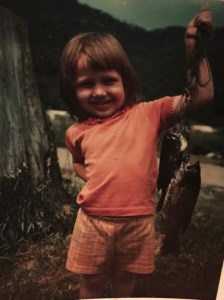
“Daddy! Daddy! Daddy!” I shouted over and over, trying desperately to hold the line as the creature on the other end resisted and fought. Satisfied that he had provided me with an authentic “catch” experience he stepped over to help, and the two of us reeled in a fish that was about half my size (which means it was pretty small). He smiled at me and said, “Well look there baby. I’ll make you a fisherman one of these days.”
One Saturday morning a couple of weeks ago I woke gently, as I try to do on Saturdays. As I rolled over to check my phone and set about the morning ritual checking in on missed calls, texts and mostly meaningless social media banter, something was immediately wrong. Noting the suspect nature of two missed calls and several text messages from my brother I knew it was serious. “Dee, get in touch with me or mom.”
Dad’s heart attack was a shock to everyone. Having never experienced any problems associated with his heart, he felt sick the entire day prior and it wasn’t until the wee hours of Saturday morning before he realized that he needed swift medical attention.
My mother, brother and extended family gathered at the hospital while he underwent a catheterization and angioplasty. My sister lovingly sent video messages and called from Chicago. My daughters sent messages of love for their Poppy from Cincinnati. Neighbors and members of his church congregation visited one after the other and in shifts, all bearing gifts.
When I arrived in Charleston, WV that Saturday afternoon my mother hugged me close, teary eyed, but relieved. She had been up all night and I could tell she was just beginning to process what had happened. It was a new day for Daddy. “He came through the heart cath just fine,” she said, hopeful. “He opened those big blue eyes and I said, ‘There you are!'” It was the same voice that she used to comfort my children when they were babies; the same voice I heard when her mother’s love outweighed all reason and circumstance.
I walked with my mother into the Surgical Intensive Care Unit, and indeed there he was. He reclined in a hospital bed that just fit, and was covered with a thin, slate blue sheet and beige blanket. The machines and computers stationed all around him told me coldly, “Do not touch. We have important work to do.” He was monitored more closely than a flight deck it seemed. The daddy that always stepped in to help everyone else was tired, knocked down for a time by an unseen menace. He was weakened, frightened and discouraged. But he was alive, and loved. I leaned down to kiss him on the forehead and teased, “You didn’t have to go to this much trouble to get me to come home from Cincinnati.” He nodded his head and raised his arms to hug me. “You didn’t have to come down here baby. Dad’s fine,” he said, unconvincingly.
A quiet and comfortable calm settled over the hospital room and the three of us. “Ginger is worried sick about you and Tony will be over after work tonight,” my mom offered. He cheered immediately knowing he would see his son and daughter-in-law later that evening and addressed my sister saying, “Tell her no need to worry.” Daddy didn’t know she was making plans to stay for an extended visit when he returned home. Clearly more concerned about his children than himself he said “I don’t want her to have to see me this way.”
We talked for a few more minutes before being interrupted by his nurse, a sweet talking, straight shooting woman named Ramona. “Tom, aren’t you going to eat your chicken?” she asked. He looked as though he might vomit at the notion of one more bite of plain, broiled, white meat hospital chicken breast and plain carrots. “Ok, she said. How about a grilled cheese?” Daddy declined at first, pouting just a little bit before he said, “I guess. Yeah get me a grilled cheese. Ramona, have you met my eldest?” Ramona smiled at me and extended her hand warmly. “She’s my little fisherman.”
The 13th anniversary of September 11 has come and gone, but I’m still thinking about it.
Not because it was the worst terrorist attack on American soil in history, or the deadliest day in history for firefighters and police officers. Not because of the blistering image in my mind’s eye of the falling man’s last moments in this life as he made an impossible choice between sudden and violent death versus slower and agonizing death by fire.
I’m still thinking about it not because I, like most everyone else older than about age 23 or so, can recall the nation’s collective surge of panic, helplessness, heartbreak, kindness and outrage at what Gen X’ers might remember as the scariest thing related to homeland security that they can remember happening in their lifetime. It’s still fresh in my mind, not because I still feel the weight of loss from that day; loss of life, loss of innocence of sorts, loss of perhaps an entitled sense of security.
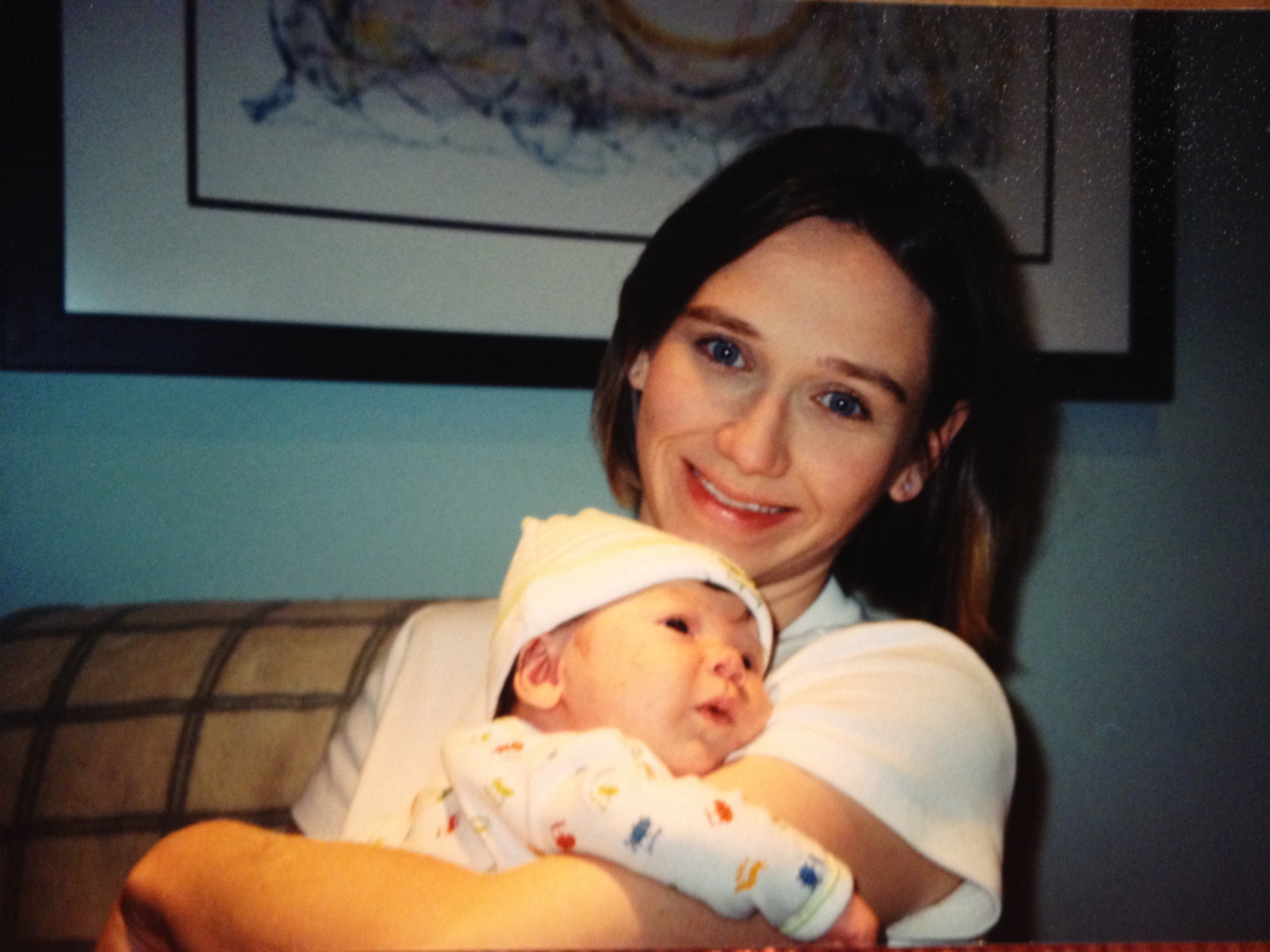
Thirteen years later, I recall in painful detail where I was and what I was doing on the morning of September 11, 2001. I was 27 years old and eight months pregnant with my first child. I remember picking out what had to be the ugliest maternity clothes I had (because they were the only ones that still fit) and going about a day’s work in small town
October 2001
Ohio with the most pressing question of the morning revolving around the choices for lunch.
But none of those facts are why last week’s anniversary is still on my mind even though the memorial ceremonies are over.
Wednesday night last week after dinner, I asked my oldest daughter how much homework she had to complete that night. It’s my standard question when, on school nights, I notice long stretches of time spent texting feverishly back and forth with her considerable social network.
“Not much,” she said. “I need to interview you, though.”
“An interview sounds fun,” I said. (I love interviews. I’ve been talking to people about their lives since I was able to talk.)
“What’s it about?”
“September 11,” she said. “For World History class we’re supposed to interview someone who remembers that day.”
I had two reactions. (1) What a cool assignment! (2) She truly has no idea what impact 9/11 had on the American collective reality.
If I’m being honest I also had a third reaction. I felt old. Kind of like when you ask your grandpa about World War II, or your parents about Vietnam. To Sophia, it probably seemed like 9/11 was as far in the past as any other event in the history books and just as one-dimensional. That was about to change.
She sat down on a barstool, pulled out a worksheet and started asking questions.
“Wait, aren’t you going to record this?” I asked. “So you can remember what was said in the interview?”
“No, I’m just gonna take notes on my phone as you talk.”
“Oh.”
Out of a desire to bond with my daughter as much as anything I took my time answering her questions, digging deep into the recesses of memory to tell her everything I thought was important about September 11, 2001. I wanted her to know. I wanted her to understand her place in the world and make changing it for the better a part of her life in some small way. Most of all I wanted her to know that even the worst of tragedies do not define us as individuals; as a nation. We still make our own destiny.
An hour later the energy between us had changed from the mechanics of a simple homework assignment to something much deeper. It was about 9:30PM, and I reluctantly pulled myself away from the dated news footage we were reviewing so that she could finish the written part of her assignment and go on to bed.
Around 10:15 Sophia asked me if I would print her assignment to turn in. I opened the file on my computer and instinctively set about proofreading her work when I realized that I was reading the manifestation of something amazing that had just transpired between my adolescent daughter and me. I had shared some of the tenderest feelings of vulnerability and love with her. Reading her assignment I realized that she heard me.
My tween heard me.
That night as Sophia and I watched old footage from the Today Show that was recorded live as the September 11 tragedy unfolded, I was transported back 13 years when I watched the same footage. That day and every day thereafter for a very long time I wondered who my new baby girl would be and how she would feel about the world when she was old enough to form an opinion.
Thirteen years ago the young girl sitting next to me was safely packaged inside of me, blissfully unaware of the day’s events. At present, she watched the footage intently, intelligently, decisively, emotionally. It was exactly the response I hoped she would have. And I know that in spite of the anxiety that sometimes comes with the realization that you’ve brought a new life into the world, that she is going to be great.
The recording of that interview plays continuously in my mind.
Remembering September 11, 2001, by Sophia Necco
Background information on the interviewee:
Name: Deidra Necco
Age: 40 (This is actually 39. Unrelated, don’t look at my Facebook birthday wishes from last year.)
Current occupation: Marketing director for Necco, our family company
Occupation on 9/11: Still the marketing director for Necco
Relationship to the interviewee: Mother
The Interview
“How did you learn about the terrorist attacks on the World Trade Center? Where were you and what were you doing?”
“I was at the old South Point office [our headquarters at the time], pregnant. I was pregnant with you.” I was her first child. “Someone rushed in and said there had been a plane crash at the WTC. I thought, ‘Oh, that’s really unfortunate.’ Eighteen minutes later: ‘There’s been another crash.’”
“What was your initial reaction when you learned the WTC had been attacked?”
“I thought to myself, ‘I hope this is a hoax. It’s probably true. Probably heading into war. This is the result of Bin Laden…’ because I had been following the news of his threats against the US. It was a very scary morning. I felt like at any minute, soldiers would be dispatched into a war zone. And not long after, they were.” She remembered the day so vividly, like it wasn’t thirteen years ago. “Navy blue pants and a bright yellow tee.” That is what she wore.
“What did you do after learning of the attack?”
“Well, everyone in the office sat around a radio. I looked online for information all day. I was very upset. I cried and cried. I was mad. And sad. And scared. Your father tried all day to get me to stop, and eventually I did. The whole time, I was thinking, ‘I hope I’m doing the right thing, bringing a child into this crazy freaking world.’”
“How did your thoughts and feelings change throughout the day as you learned more information and realized four attacks had taken place?”
“By the end of the day, it sank in. I mostly felt very angry and very sad for all the people who had lived and died in that crazy terror. Then the stories came of the last phone calls. People called their spouses, their parents, saying, ‘I love you, goodbye.’ It was so painful to watch; it just made you so mad. How dare you. What right do you have to kill innocent people?”
“What was the most frightening part of that day?”
“Not knowing if there was going to be a surprise attack somewhere else. I immediately thought of my sister, working in a tall building in Chicago. I called her before anyone else, telling her to leave. However Sophia, you were the first person I thought of. ‘My poor [first] baby is being born, and we are going into crazy war.’ Second thought was, ‘Where’s my sister?’”
“How did the events of 9/11 change your life?”
“The airport was an absolute pain. It’s almost like being disillusioned. Like if you could’ve known what it was like before then, the U.S. enjoyed more economic prosperity. It was a happier time. It’s like when you’re at a really fun event, and you’re on the dance floor having the time of your life, and someone just turns the lights on and says, ‘Party’s over,’ but obviously this is tragic – a complete nightmare. It was a wake up call. The rest of the world doesn’t live the way we do. We need to pay attention. I mean, who wasn’t paying enough attention? Who let this happen?”
“What is one thing you will remember the most about that day or the days and weeks that followed?”
“One story that really bothered me was about a company whose employees were all on the highest floors. Every. Single. One. Died. It was like if we showed up at Necco one day, and everyone was just dead. Weeks after were story after story of lost loved ones, people trying to save each other. That was what stuck with me, the human cost. It also puts things in perspective and you realize how sheltered we have been compared to other parts of the world. We lost almost 3,000 people there, but in WWII, the world lost millions of Jews. I sometimes feel guilty about places like Africa, where there are massacres killing large populations. It was the scariest moment I ever remember in my life.”
“Do you think Americans will ever feel as safe as they felt BEFORE the events of 9/11?”
“I think it’s more of a matter of just being more cautious. I want to think people are really making an effort to learn about the rest of the world. It would make a huge difference alone in politics, policy, and other things, if you study the needs of others. Americans to me are generally just stubborn. We have the, ‘Screw you, we’re the free. You came over on September 11, but you better not do it again,” attitude. “Very resilient.”
“What else would you like to tell me about your experiences on 9/11?”
“I was thankful I didn’t lose anyone, and I called my sister every day for a while to make sure she was alright. I tried to watch the stories, because I thought the least I could do was to hear about who these people were, and remember them. And even though I didn’t know them, I wanted to be that one more person out there that honors their memory.” She paused. “The worst part was that you were being attacked. You knew someone meant to do that, and you didn’t know what else was planned.”
“You should’ve recorded that,” she said to me. “I’ve never told that to anyone.”
My Reflection
2014
I was honestly pretty surprised by the results of this interview. I didn’t expect it to turn into such a deep conversation, or that my mom would really get that emotional over it. It just makes me think about the people who actually did lose a loved one. I feel like I should be more scared than I am (which is not scared at all). I do feel awful for the people who were really deeply affected by this, and clearly, my mother did do. I felt like when I listened to her answers to these questions, I saw a new side of her. She wasn’t just my mom; she was a person, just like so many others, that had been touched.
I feel like an event like this, while tragic, can really bring people together. 9/11 has always fascinated me. When I did my research this time, I looked for the happy stories. It made me smile looking at the kind messages left by total strangers, the way the medics, the police, and just ordinary people rushed to the site, ready to perform extraordinary acts of kindness for anyone in need. It really makes a statement about human nature. We’re shown how people can be so crazy hateful to each other, but in the end, they are always in some way trying to do the right thing. I’m not trying to romanticize Al Qaeda, because under no circumstance is it okay to kill innocent civilians. But in their minds, I guess they thought they were doing what they had to do. It raises the question for me, “Do they even consider themselves terrorists? Or do they think they are doing what has to be done?” I think even the cruelest villains are heroes in their own minds.
On the other hand, we are also shown how people come together in an emergency to help each other. Even though the people rushing to help those in New York had never talked a day in their life, they worked together to be kind, and put the needs of others first. Or when the people on the last flight knew the plane was being hijacked, they worked as a team to keep the plane from crashing into the capital. And although they knew they weren’t going to make it, they still put everything else aside in order to keep the people outside the plane safe.
The more I think and read about 9/11, the scarier it becomes. I didn’t know before that the fourth plane was heading towards the capital. I just found that out, actually, because I had to Google where the other plane was supposed to have landed. I’m just thinking about how terrifying it must’ve been to be on that flight, hearing about smoke from the bathrooms, watching as a scary man with an angry face takes control of the plane. Just looking at the route the terrorists planned was scary to me, because I know that something is very wrong with it. That is not the way the plane was supposed to go. Planes don’t fly like that.
Also, that’s our capital. The most important place in our country, the very place that rules us, could’ve been completely gone had it not been for Flight 93’s passengers. All our records would be gone. Our laws, our rulers, our plans for our future, and that of the rest of the world… Gone.
Hearing about 9/11 has helped me appreciate my life a lot better. I feel like I should really pay even more attention to the little things in life, and not get caught up in drama, because life is a pretty special thing, and I won’t have it forever. I sound very cliché right now, but it’s the truth. So just to be extra cheesy, I’ll end this essay by saying, “You only live once. #YOLO.”




 “Daddy! Daddy! Daddy!” I shouted over and over, trying desperately to hold the line as the creature on the other end resisted and fought. Satisfied that he had provided me with an authentic “catch” experience he stepped over to help, and the two of us reeled in a fish that was about half my size (which means it was pretty small). He smiled at me and said, “Well look there baby. I’ll make you a fisherman one of these days.”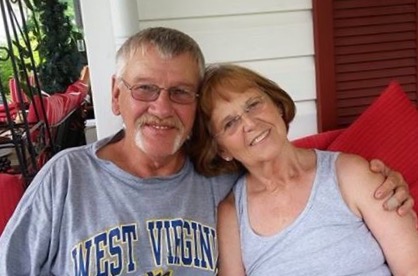

 Dee Wiley