
We pulled off the interstate in Richmond, Kentucky. It was our second gas stop less than two hours into the drive, our SUV heavy with boxes, working hard under the weight of my daughter’s belongings. Truthfully, we could have driven a little farther, but I couldn’t resist introducing her to the spectacle of Buc-ee’s.
Beneath the giant red-and-yellow sign, we snapped a quick photo to share with family before we hurried out of the cold. Surrounded by families swirling loudly around us, and a grinning, red-shirted rodent plastered on every surface, I felt the shift. It was the first day of 2026, and January had already set the pace.
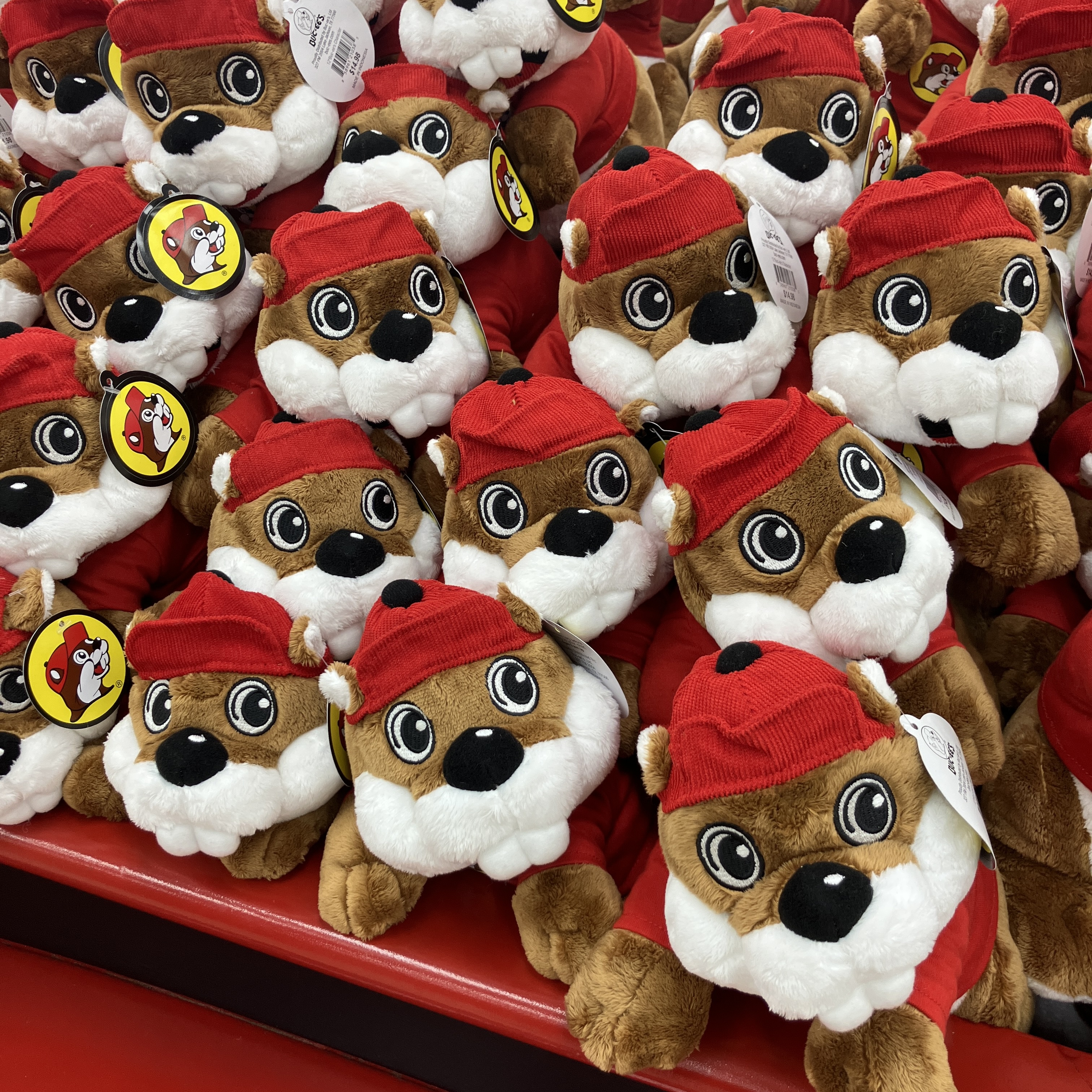
Stepping just inside the door, my daughter froze. My secret plan to distract her from the heavy reality of leaving her hometown for college seemed to be working — at least temporarily. I had plenty of help. Lines of hungry travelers waiting for brisket sandwiches. Literal walls of jerky. A Cracker Barrel’s worth of cheeky home décor. And the world’s richest beaver, smiling knowingly, as the cash registers rang nonstop.
“This is… a lot,” she said, squinting, suspended in amused (and slightly horrified) disbelief.
I hadn’t expected to be presiding over this rite of passage, but there we were. Out of nowhere, a petite young woman approached me, holding the same pink Buc-ee’s sweatshirt in each hand.
“Excuse me, ma’am,” she said. Which size should I get?”
Sophia and I glanced at each other curiously. Was I really just referred to as…ma’am? I quickly sized the woman up.
“You should get a small,” I answered, definitively.
We locked eyes. The woman nodded solemnly, as if this were an urgent matter, and marched straight toward the cash register. My daughter and I looked at each other again, exchanging a silent but mutual What just happened?
The car was packed. The schedule was tight. The stakes were enormous. Yet there we were, giving wardrobe advice to a stranger and debating whether anyone truly needs a giant bag of Beaver Nuggets.
With more than fourteen hours still ahead of us, resistance felt pointless. We joined the flow instead, one more pair of travelers taking a sanity break before returning to whatever waited down the road.
“This is how January began, barreling onto the freeway of my life at one hundred miles an hour.”
This is how January began, barreling onto the freeway of my life at one hundred miles an hour. From day one through January thirty-first, the gas pedal never left the floor. Goodbyes and celebrations crowded the same week while endings melted into beginnings. One moment asked me to let go while the next called me forward. All of it unfolding against a backdrop of snow and a relentless cold that seems determined to stay.
Somewhere between Buc-ee’s and our destination, I stopped pretending this was a month I could curate. It wasn’t interested in reflection. It was asking me to keep up. I decided to put change in the driver’s seat without negotiating with it to slow down.
I started calling it Join-You-Ary: the month you merge into with your signal on, your heart racing, and possibly an energy drink in your cup holder. It was go time and we were ride or die.
The packed calendar and constant momentum felt both familiar and necessary. There was comfort in staying busy, although I knew it would have been useless to say no. Opting out at any point during the month would have meant resisting the many transitions already underway.
I have grown used to being a safe place to land while others prepare to move into their next chapters. I embraced my sweet mother as she reached the end of her life. I helped my father, badly bruised, but not broken, find his footing when his world fell apart without her. When my daughter needed me, I sheltered her as she navigated the uneven, uncertain work of becoming herself.
I have spent years willingly packing and unpacking for the people I love. This season was changing now, and for the first time in a long while, I wasn’t just holding the line. I was crossing it.
As I delivered my daughter to college, I quietly stepped into a new phase of my own. More space was opening to nurture a partnership oriented toward the future and a widening sense of family. A life shaped less by who needs me most and more by who walks beside me began to seem possible.
This wasn’t just a road trip. It was a very special delivery. The pain, the fits and starts, and the heavy work of waiting had stretched for what seemed like an eternity. And then, suddenly, we were here. We had arrived. My daughter was ready, and I was carrying her to a new nest she could make her own. I was ready, too.
“This season was changing now, and for the first time in a long while, I wasn’t just holding the line. I was crossing it.”
One week later, I found myself seated on an airplane alone while my daughter attended orientation for transfer students only a few miles away. Settled in her new place with her sister and family close by, I felt comforted. But I was sad to leave them. The thought of coming back energized me, though, and I suddenly felt filled with excitement to jet away to the next stop.
Waiting for the other passengers to board, I wondered how the house would feel now. I had bought it with the intention of making it a safe haven, a home base for both my daughters, insulated from the sharp edges of the world. Although that did not work out exactly as I had planned, it had delivered, carrying us through a decade of joy and grief, sheltering not only me but my entire family through more than I could have imagined at the start.
With less than twenty-four hours before my next flight — this one to New York for an engagement celebration — there wasn’t much time to think about where I’d been. In a few hours, I would put away the shorts and flip-flops I’d packed for Florida and pick up the winter layers from the pile of clean laundry I’d left folded on my bed. Next stop Manhattan and a host of new faces I couldn’t wait to meet.

 Dee Wiley